What it is, and what it isn't
Ninja kabuki show, explained
What the ninja kabuki show in Shinjuku is, and whether it counts as real kabuki: a largely non-verbal fusion show of taiko, sword fights and a ninja segment.
Book the ninja stage show ↗Quick answer
The ninja kabuki show is a modern stage show at WARP SHINJUKU in Kabukichō, produced by the Japan Ninja Council. It borrows kabuki's production methods but is not a classical kabuki play: it is largely non-verbal and mixes taiko drumming, sword fights and dance, a hands-on ninja segment and a finale for the whole cast. It runs about 80 minutes.
The short answer, and what it leaves out
The ninja kabuki show is a modern stage show, not a kabuki play. It plays at WARP SHINJUKU, a basement venue in Kabukichō, and the Japan Ninja Council produces it. The show's own site describes an indoor ninja and kabuki show of about 80 minutes, and the ticket description calls it non-verbal live entertainment built with kabuki production techniques. So the word kabuki here describes how the stage is built and lit, not the repertoire. Expect spectacle and rhythm first and plot second. If you arrive hoping for a kabuki play, you will be looking for something the show does not set out to be. The list below sets out the difference in plain terms.
- It is: a largely non-verbal show of taiko drumming, sword fights, dance and a hands-on ninja segment.
- It is: staged with kabuki production methods, which the ticket description says have been passed down since the Edo period.
- It isn't: a classical kabuki play. Those are staged at theatres such as the Kabuki-za in Ginza.
- It isn't: a history lesson about real ninja.
Where it plays and who is behind it

The show's own site gives the venue as WARP SHINJUKU, on the basement floor of a building at 1-21-1 Kabukichō, Shinjuku-ku, next to the Godzilla Head. It names the Japan Ninja Council as producer and describes the council as a ninja-culture promotion body of local governments. A March 2015 TravelMole report said a steering group of local government representatives from Iga, Kōka, Ueda, Odawara and Saga had formed to set the council up. The site names Denjirō Tanaka VII, a kabuki musician who first performed on stage at the age of three, as director. SoraNews24 and the ticket description both add that he performed at the Tokyo 2020 Olympic opening ceremony.
What kabuki is, and where this show sits
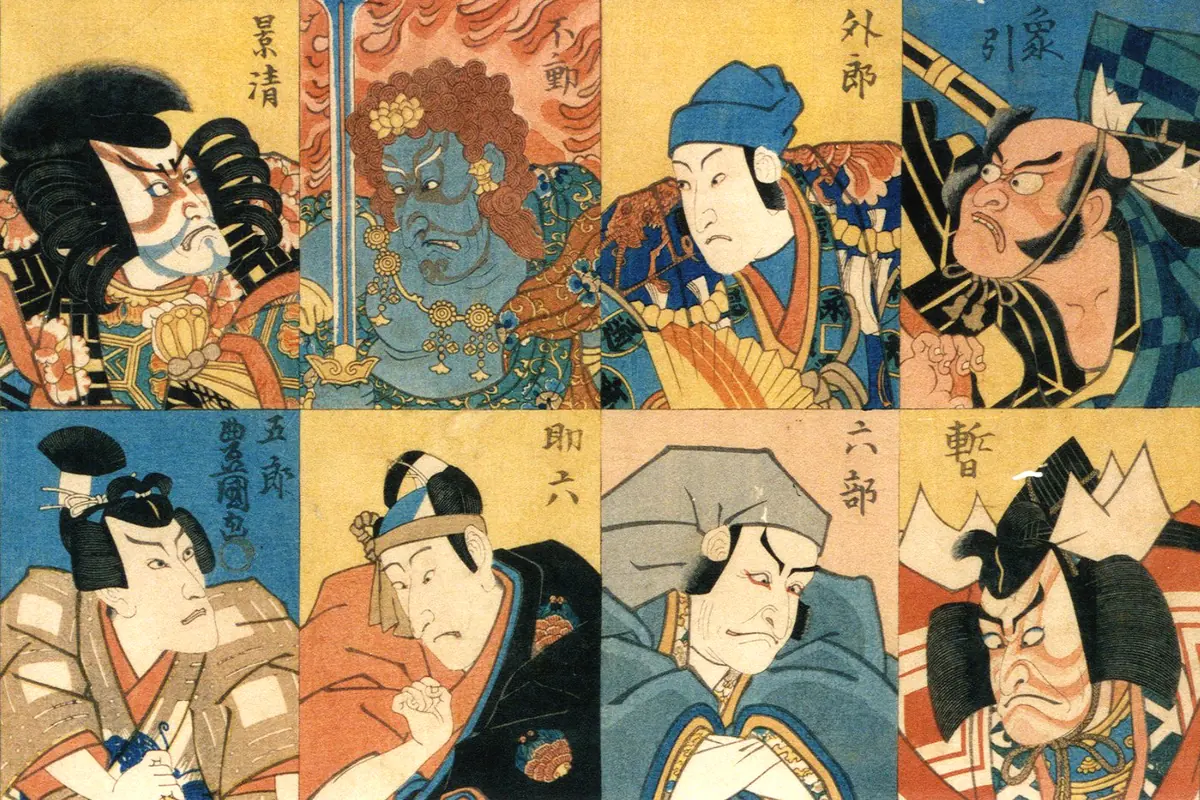
Wikipedia dates the history of kabuki to 1603, when Izumo no Okuni, a former shrine maiden, began performing with a troupe of young female dancers in Kyoto. It says the word may come from kabuku, to lean or to be out of the ordinary. Women were banned from kabuki in 1629, and the art developed into its present all-male form, with onnagata playing the women's roles. UNESCO, which inscribed kabuki on its Representative List in 2008, notes that the actors speak in a monotone voice, accompanied by traditional instruments. This show, by contrast, is largely non-verbal. The kabuki guide on this site covers the art form's makeup, poses and theatres in more detail.
Read next: Kabuki for first-timers
What the show borrows from kabuki
Kabuki has its own stage machinery. UNESCO lists revolving stages, trapdoors and the hanamichi, a footbridge that extends into the audience, and it describes the mie, the pose an actor holds to establish a character, and keshō, the makeup. The show's own site says guests get a keepsake photo with the boss ninja in kumadori makeup. Kumadori is kabuki's striped makeup, and Wikipedia says red marks a powerful hero and blue a villain. The show's site does not mention a hanamichi or a revolving stage, so do not book expecting either. The safest reading is that the borrowing is mostly visual and musical: makeup, poses, staging and drums, rather than the machinery of a kabuki house.
The four parts of the night
The show's own site lists four parts, in this order. Treat the list as the programme the site currently shows, not as a promise, because details and running order can change from one visit to the next. SoraNews24, reporting on the opening in August 2024, described a story about rival ninjas fighting over a sword that brings peace. That was the plot then, and the show may have been reworked since. The ticket description frames the whole evening as ninja, oiran and wadaiko told through the evolving artistry of kabuki. Ask at reception on the day whether filming is allowed during the performance.
- A wadaiko overture: live taiko drumming opens the night.
- Kabuki-style sword fights, which the site calls tate, and Japanese dance.
- A hands-on ninja segment where guests throw shuriken and try stage combat, guided by the performers.
- A finale for the whole cast, with a keepsake photo.
The drums
The Japanese word taiko means drum. English speakers use it for wadaiko, the Japanese drums, and for kumi-daiko, playing them as an ensemble. Wikipedia dates archaeological evidence of taiko in Japan to the 6th century CE, with uses that run from communication and war to festivals and court music. Group drumming as a concert form is much younger: Wikipedia credits Daihachi Oguchi with developing kumi-daiko in 1951, and that the groups Ondekoza and Kodo later carried it abroad. Reviewers praise the drumming, and one wonders how long the drummers took to learn such a long piece together. The overture also sets the tone for the rest of the evening, which reviewers describe as rhythmic and loud, so families should be ready for the volume from the first minute.
Ninja, kabuki and the colour black
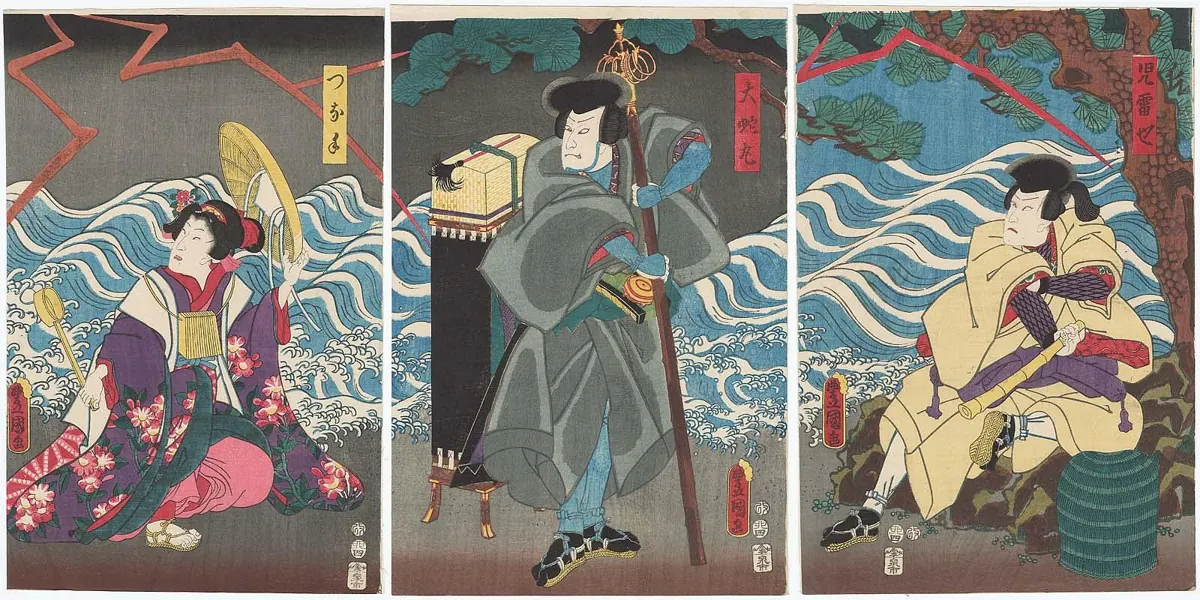
Wikipedia defines the ninja as a spy and infiltrator of pre-modern Japan and adds that evidence for ninja as assassins is thin. In peacetime, it says, ninja typically wore work clothes like farmers, probably dark brown rather than black. The all-black look is tied to kabuki: kuroko, stagehands who dress entirely in black, are traditionally treated as invisible, and the historian Stephen Turnbull suggested that the stereotypical black-clad ninja derived from kabuki. A ninja show built with kabuki staging therefore borrows from the tradition that, on Turnbull's suggestion, shaped how ninja are pictured. Wikipedia adds that the Edo theatre developed many stereotypes, including the use of shuriken, which contrasted with the swords of onstage samurai.
Read next: Ninja history versus myth
Oiran, the third theme
The ticket description names three themes: ninja, oiran and wadaiko. Oiran were top-ranking courtesans of Edo-period Yoshiwara. Wikipedia says they were first and foremost entertainers, trained in tea ceremony, calligraphy and instruments such as the koto and shamisen, and that the term arose in Yoshiwara in the 1750s. It also notes that oiran by definition engaged in prostitution, which Japan later outlawed. On this stage the oiran is a costume and a character. The real history of Yoshiwara is more complicated and less glamorous than a stage can show, which is why the separate guide on oiran, with its sources, is worth reading first.
Read next: Who were the oiran?
What reviewers say
The page where you book averages 4.2 out of 5 across 509 reviews, a good score and not a glowing one. Reviewers single out the taiko drumming, the lighting and visual effects and friendly staff, and several say children enjoyed it. A recurring caution is volume: one reviewer advises being prepared for a loud performance while adding that it is worth it. Another says they arrived late and were still admitted for the last half of the show, which is one traveller's account and not a promise. With 509 reviews, a 4.2 is a meaningful signal and not the verdict of a few unhappy guests, and it tells you the show suits some visitors better than others.
Who this isn't for
Pass on it if you want classical kabuki, with spoken or sung text and an acting lineage behind it. Pass on it if you want a story told in words, because the show is non-verbal. Think twice if loud music bothers anyone in your group, or if you want to choose your seat: seat reservations are not available on the GetYourGuide ticket, and seats are allocated by number tag. And if you want a walk through ninja history, a museum visit does that job better than a stage show. A show is built for spectacle, so use the sourced guides on this site for the history and keep the evening for the spectacle.
Where to see classical kabuki instead
Wikipedia calls the Kabuki-za in Ginza the principal theatre in Tokyo for traditional kabuki. Programmes change monthly, with a different afternoon and evening set of plays and dances, and KabukiWeb lists a box office for single-act tickets, which suit a short first visit. Wikipedia says the current building opened on 28 March 2013 and was designed by Kengo Kuma. The kabuki guide on this site explains what you will see and hear there. If you want a short classical taste, the single-act route avoids committing to a whole programme, and the National Theatre company's kabuki and bunraku programme, shown as the second card in the booking section, is another short classical option whose content varies by date.
Read next: Kabuki for first-timers
Frequently asked questions
What is the ninja kabuki show in Shinjuku?
It is a largely non-verbal stage show of about 80 minutes at WARP SHINJUKU in Kabukichō. It mixes taiko drumming, kabuki-style sword fights and dance, a hands-on ninja segment and a finale for the whole cast.
Is the ninja kabuki show real kabuki?
Not classical kabuki. It borrows kabuki production methods and staging, but it is a modern fusion show without the spoken text of a kabuki play. Classical kabuki is staged at theatres such as the Kabuki-za in Ginza.
Do I need to speak Japanese?
No. The show is largely non-verbal, and the show's own site says English-speaking staff are on hand.
Who runs the show?
The show's own site names the Japan Ninja Council as producer and Denjirō Tanaka VII, a kabuki musician, as director. The ticket description says the council and Tanaka supervise it.
What is the rating?
Its GetYourGuide page averages 4.2 out of 5 across 509 reviews. Praise goes to the taiko, the effects and the staff, while some guests call it loud.
Is it good for children?
Children aged 0 to 6 enter free on the GetYourGuide ticket, and children under 16 need a parent or guardian. Reviewers describe children enjoying it, though the sound is loud.
Sources