A third theme of the show
Who were the oiran?
Who the oiran of Edo-period Yoshiwara were: top-ranking courtesans and entertainers, how they differed from geisha, and why they appear on a Shinjuku stage.
Book the ninja stage show ↗Quick answer
Oiran were the top-ranking courtesans of Edo-period Japan, centred on the licensed Yoshiwara quarter of Edo. Wikipedia says they were first and foremost entertainers, trained in arts such as the koto and shamisen, and that they also engaged in prostitution. They are not the same as geisha. Today the oiran survives as a costume, a festival procession and a stage character.
A word from Yoshiwara
Wikipedia says the term oiran originated in Yoshiwara and places this in the 1750s. Oiran were a group of top-tier courtesans, considered above common prostitutes because of their entertainment skills and arts training, and the top rank among them was the tayū. The word is therefore both a title and a grade, and it belongs to a particular place and period rather than to Japanese history in general. When a stage show says oiran, it is borrowing a title with a specific meaning, and the sections below set out what Wikipedia says that meaning was.
The licensed quarter
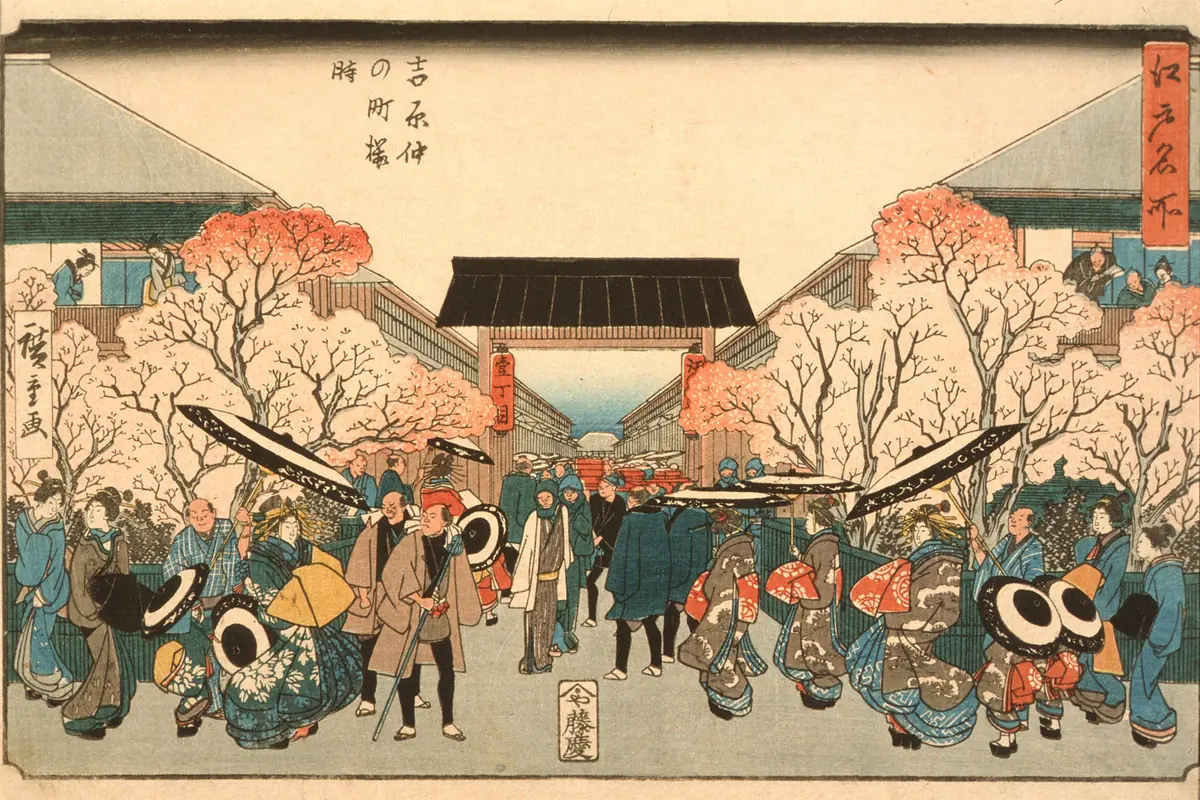
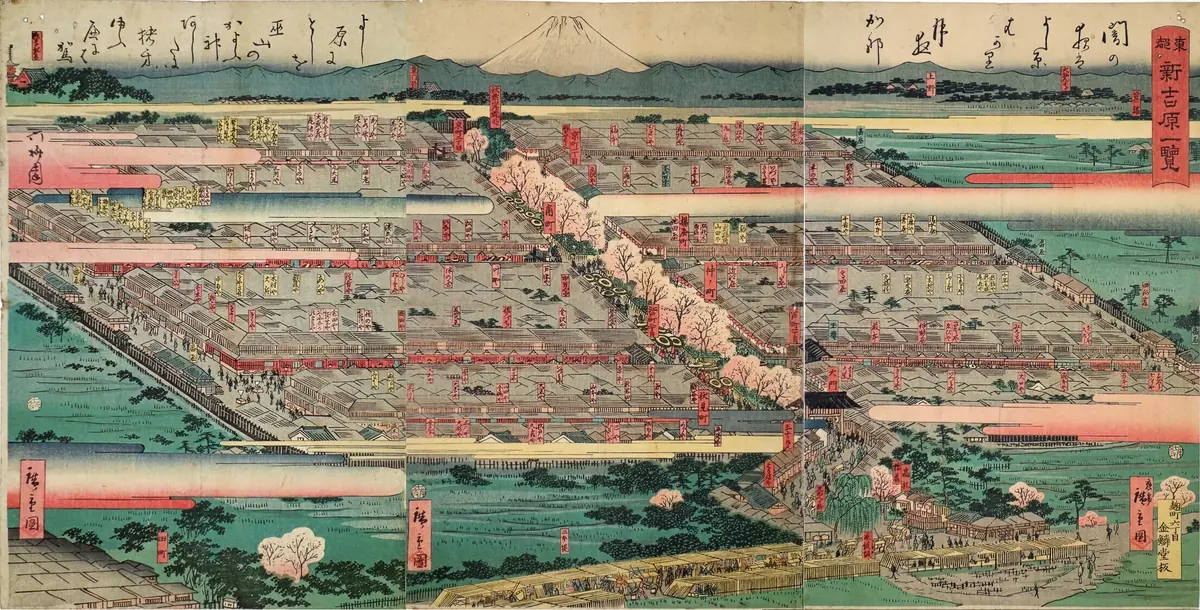
Wikipedia says Yoshiwara was established in 1617 in Edo, today's Tokyo, as one of three licensed and well-known pleasure quarters. The government moved it to a new site as the city grew, and the original district burned in the Great Fire of Meireki of 1657. It describes Yoshiwara as a government-sanctioned pleasure quarter, and says it stayed in business until prostitution was outlawed in Japan.
Entertainers first
Wikipedia says oiran, especially tayū, were first and foremost entertainers. Their training included the tea ceremony, flower arranging and calligraphy, and instruments such as the koto and shamisen, and clients also expected them to be well read and witty in conversation. Their services were well known for being exclusive and expensive, and higher-ranking oiran had a degree of choice in which customers they took.
Not the same as geisha
Wikipedia draws the line this way: geisha became popular among the merchant classes, while oiran were largely patronised by the upper classes. Oiran faced an inability to leave the pleasure districts, whereas geisha could leave their houses and choose their patrons. The two are often confused by visitors, but they are different professions with different histories. Visitors often confuse the two, so the distinction is worth having in mind when a show names an oiran.
The look
Wikipedia says an oiran wore upwards of eight large kanzashi, or hair ornaments, in an elaborate hairstyle. Her wooden clogs, called koma geta, were about 20 centimetres tall, with three raised teeth, which forced a slow, small-step gait. Her obi was tied at the front. That silhouette is what a stage or festival oiran reproduces, and it is the part of the figure that survives in costume. The walk was slow because of the clogs, which is why oiran processions today are slow, ceremonial events and not casual street scenes.
Oiran today
Wikipedia says that after prostitution was outlawed in Japan the tayū who remained in Kyoto continued practising traditional performing arts without the sexual aspect. The Bunsui Sakura Matsuri Oiran Dōchū, held every April in Bunsui, Niigata Prefecture, features three women dressed as oiran in full traditional attire. On the Shinjuku stage, SoraNews24 and the ticket description name oiran as one of the show's three themes, alongside ninja and wadaiko; neither source describes the oiran scene in detail, so this guide does not either.
Read next: Ninja kabuki show, explained
Who this isn't for
This guide is not a full history of Yoshiwara and does not romanticise it. The quarter was a regulated system in which many women had little freedom, and Wikipedia says the oiran themselves could not leave the pleasure districts. A stage character wearing the costume is entertainment; if you want the social history, read the sources linked below. The show itself is not a history of Yoshiwara and does not claim to be.
Frequently asked questions
What does oiran mean?
Top-ranking courtesan of Edo-period Yoshiwara. Wikipedia says the term originated there in the 1750s, and the highest rank was the tayū.
Is an oiran a geisha?
No. Wikipedia says geisha were popular with merchants and could leave their houses, while oiran were largely patronised by the upper classes and could not leave the pleasure districts.
What was Yoshiwara?
A government-licensed pleasure quarter established in Edo in 1617. Wikipedia says it stayed in business until prostitution was outlawed in Japan.
What did oiran do besides entertain?
Wikipedia says they also engaged in prostitution, though they were considered above common prostitutes because of their arts training.
Do oiran still exist?
As costume and festival figures, yes. Wikipedia describes an annual oiran procession each April in Bunsui, Niigata Prefecture.
Sources