The real thing
Kabuki for first-timers
What classical kabuki is, what the makeup, poses and stage devices mean, and how a first-timer can see it at Tokyo's Kabuki-za without a full-day commitment.
Book the ninja stage show ↗Quick answer
Kabuki is a Japanese theatre art that began in 1603 and is now performed by all-male casts, with actors in striking makeup, held poses called mie, and music from traditional instruments. In Tokyo the principal theatre for it is the Kabuki-za in Ginza. Its programmes change monthly, and single-act tickets let a first-timer watch one act instead of a whole programme.
Where kabuki came from
Wikipedia says the history of kabuki began in 1603, during the Edo period, when Izumo no Okuni, a former shrine maiden, started performing with a troupe of young female dancers in Kyoto. The name may come from kabuku, to lean or to be out of the ordinary; kabukimono originally meant people who dressed in bizarre ways. The three characters used to write kabuki read as sing, dance and skill, though Wikipedia calls them ateji that do not reflect the real etymology.
Why the casts are all male
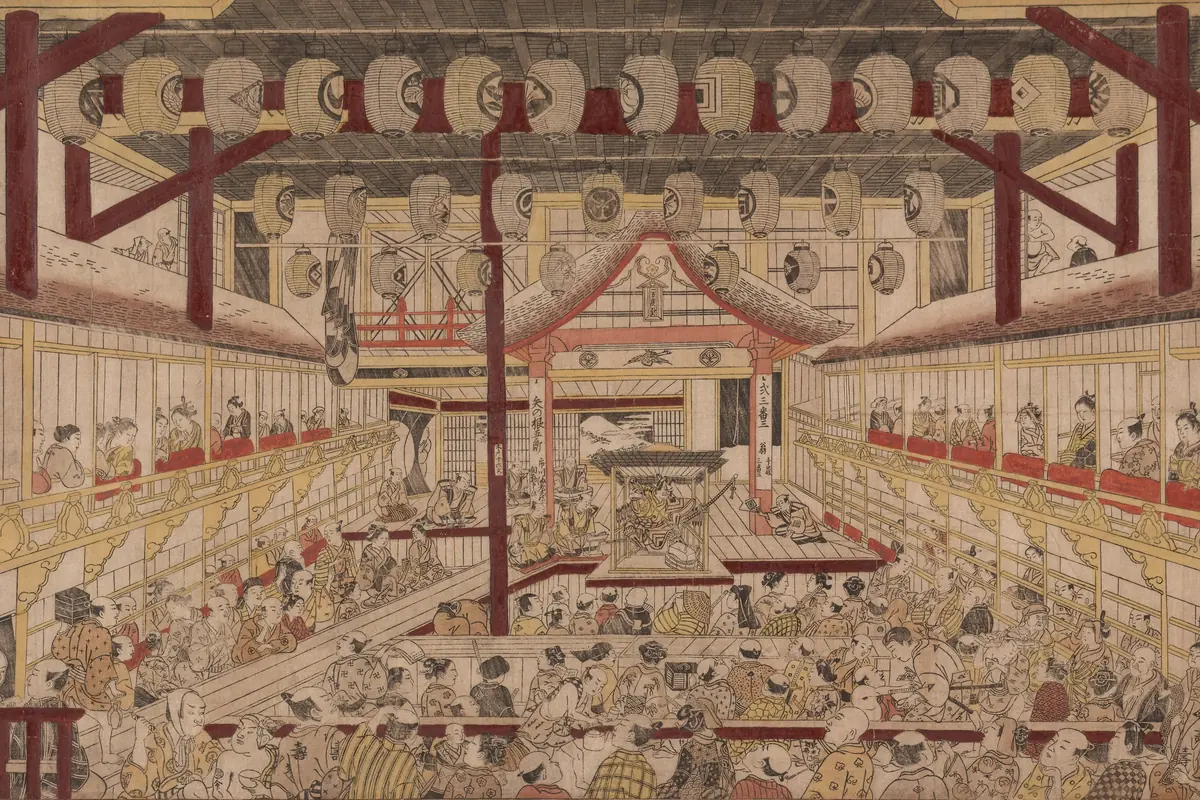
Wikipedia reports that women lost the right to perform kabuki in 1629, and that the art then grew into the all-male form it has today. Male actors known as onnagata, a term meaning woman role, play the female parts. UNESCO, which listed kabuki as intangible cultural heritage of humanity in 2008, three years after first proclaiming it, says the stories concern historical events and moral conflict in relationships of the heart.
Makeup, poses and the walkway
UNESCO says actors speak in a monotone voice, accompanied by traditional instruments, and hold a characteristic pose called the mie to establish their character. Kumadori is the striped makeup of some roles: Wikipedia says red marks a powerful and virtuous hero, and blue marks a villain or negative emotions such as fear and jealousy. The hanamichi is a footbridge extending into the audience, used for dramatic entrances and exits. The stage also has revolving sections and trapdoors.
The people in black
Kuroko are stagehands who, in Wikipedia's words, are always dressed entirely in black and are traditionally considered invisible. They move scenery and props and help with scene and costume changes, and sometimes play animals or other small roles by holding a prop. You are meant not to see them. That convention matters beyond the theatre, because the historian Stephen Turnbull suggested that the image of the ninja dressed all in black came from kabuki.
How a programme is built
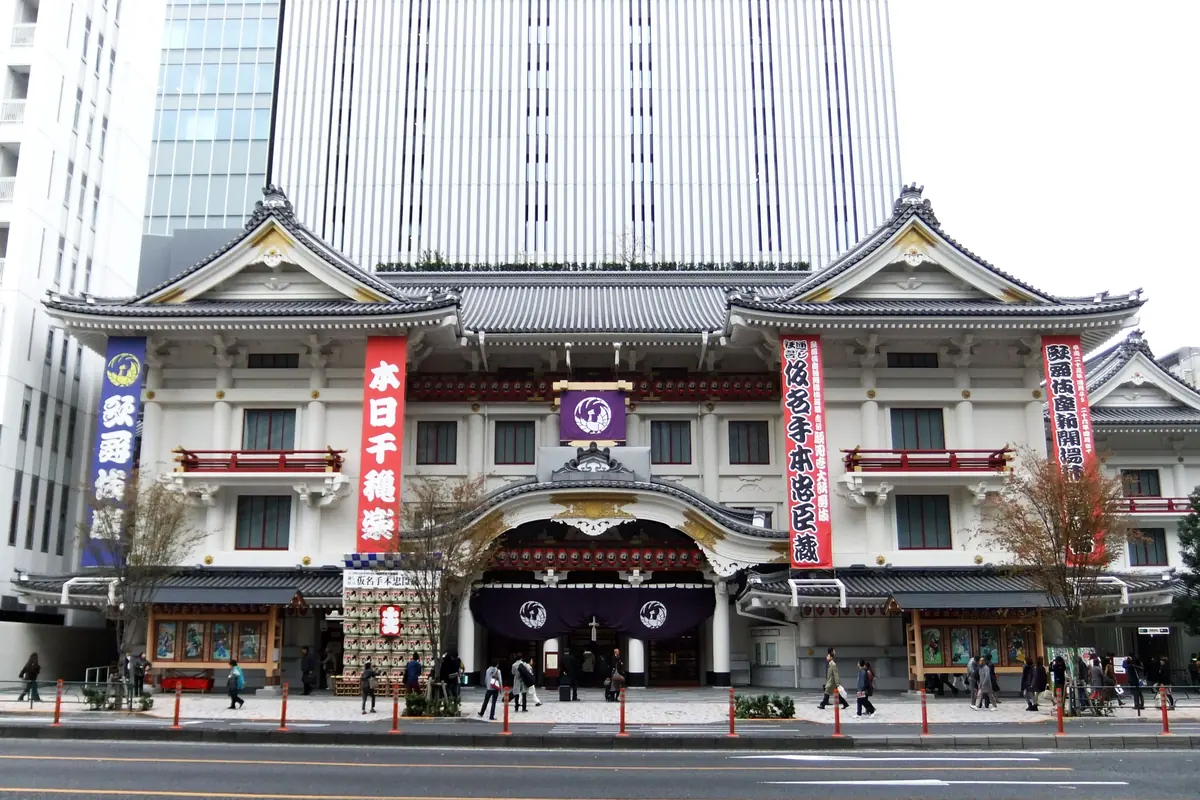
Wikipedia says kabuki was traditionally performed in full-day programmes, with one play of several acts spanning the day, and that nearly every full-length play has five acts. At the Kabuki-za today, it says, programmes change monthly, with a different afternoon and evening set of plays and dances, performed nearly every day. KabukiWeb notes that intermissions are usually 20 to 30 minutes, with restaurants open to the audience during them.
Seeing it as a first-timer
The Kabuki-za stands in Ginza; Wikipedia says its current building opened on 28 March 2013 and was designed by Kengo Kuma, and that Shochiku operates it. KabukiWeb lists two ticket types for English-language services, a full programme and a single act, with the single-act box office on the first level to the left of the main entrance. It also describes an English captioning service giving essential translations of dialogue and lyrics. Check the theatre's current ticketing before you go.
Other places to watch
Wikipedia names the National Theatre, the Kabuki-za and the Minami-za as major theatres fitted with the stage-flying installations called chūnori. Each theatre publishes its own programme, so check what is on before you go. If you want a modern show that borrows kabuki's staging instead, the ninja kabuki guide on this site explains what that evening is, and how it differs from the theatres listed here.
Read next: Ninja kabuki show, explained
Who this isn't for
Classical kabuki is not for anyone who wants fast action in a short time with no explanation. A full programme is long, the pace of the older plays is deliberate, and much of the pleasure is in details such as a held pose or a costume change. If that sounds like too much, a single act is the gentle way in, and a modern fusion show with drums and sword fights is a different evening altogether.
Frequently asked questions
What is kabuki?
A Japanese theatre art that began in 1603 and developed into an all-male form after women were banned from it in 1629. It uses distinctive makeup, held poses, traditional instruments and special stage devices.
Where do I see kabuki in Tokyo?
Wikipedia calls the Kabuki-za in Ginza the principal theatre in Tokyo for traditional kabuki. Programmes change monthly.
Can I watch just one act?
Yes. KabukiWeb says the Kabuki-za offers single-act tickets alongside full-programme tickets. Check the theatre's current ticket rules before you go.
What does the makeup mean?
In kumadori, Wikipedia says red marks a powerful, virtuous hero and blue marks a villain or negative emotions such as fear and jealousy.
Why are the stagehands dressed in black?
Kuroko wear black head to toe so that they are treated as invisible while they move scenery and props.
Sources